
SGS SBTC® Implant Surface: What Does the Clinical Evidence Show?
An examination of the 2024 randomised controlled trial investigating the clinical performance of Smart Bioactive Trabecular Coating.
The surface of a dental implant plays an important role in the biological processes that follow placement. While implant geometry and surgical technique largely determine initial mechanical stability, the interaction between the implant surface and surrounding bone contributes to the subsequent development of osseointegration.
Over recent decades, considerable research has focused on modifying titanium surfaces to encourage a favourable biological response. Among the approaches investigated are micro-roughened surfaces, hydrophilic treatments and bioactive coatings incorporating calcium phosphate compounds.
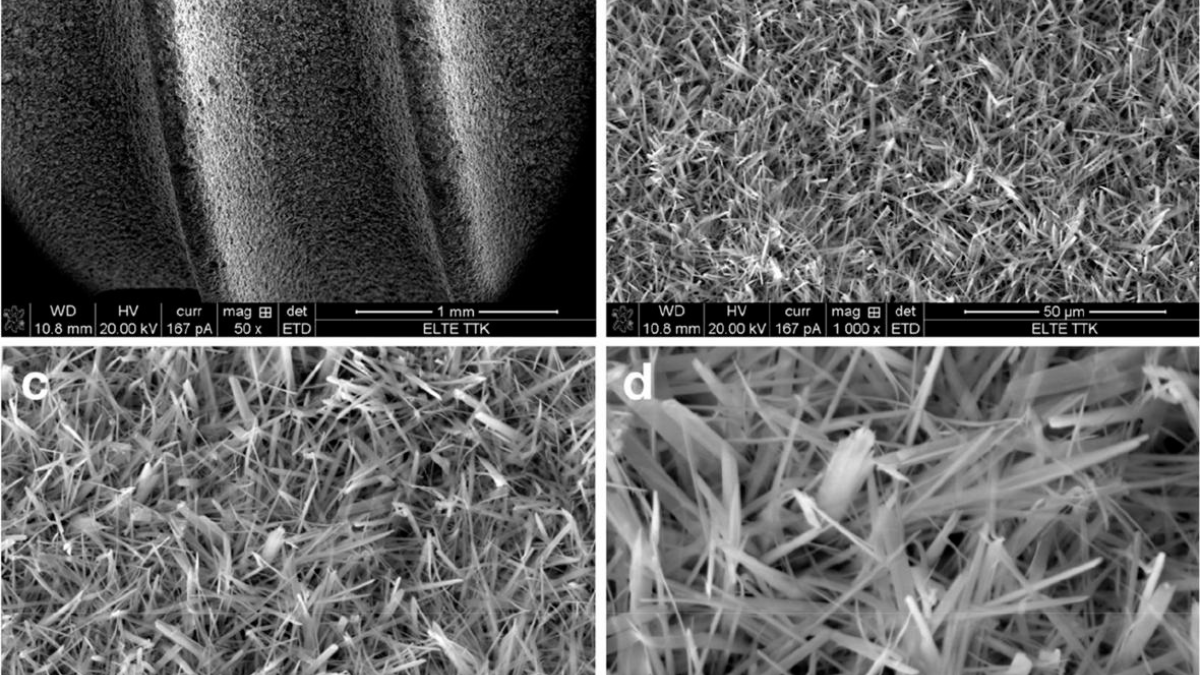
SGS Dental’s Smart Bioactive Trabecular Coating (SBTC®) belongs to the latter category. Rather than relying solely on mechanical surface modification, the technology incorporates an electrochemically deposited calcium phosphate coating designed to interact with the biological environment at the bone–implant interface.
In April 2024, a randomised controlled clinical trial published in Head & Face Medicine provided clinical evidence concerning its performance. The findings are relevant to understanding the technology, although their significance requires careful interpretation.
How was the study conducted?
–
The research, conducted by Antal and colleagues, compared implants treated with SBTC® against implants receiving Bonit®, an established electrochemically deposited calcium phosphate coating containing brushite and hydroxyapatite.
Twenty fully edentulous patients participated in the study, receiving a total of 40 implants in the mandible. A split-mouth design was used: each participant received one implant with the SBTC® coating and one with the control coating, with the allocation to the left or right side randomised.
Importantly, the implants were otherwise identical. All were SGS P7D implants manufactured from Ti6Al4V titanium alloy, with identical implant designs and matching dimensions within each patient. This arrangement allowed the researchers to investigate differences associated with surface treatment while limiting the influence of other variables.
Each case underwent digital treatment planning, and implants were placed using static surgical guides. The patients subsequently received implant-retained mandibular overdentures, with loading performed three months after implant insertion.
The study followed participants for two years, recording implant stability, changes in peri-implant bone levels, oral health-related quality of life and clinical complications.
What did the researchers find?
–
All 40 implants achieved successful osseointegration and remained in place throughout the observation period. No implant losses or adverse events were reported.
Implant stability was assessed using resonance frequency analysis, expressed as Implant Stability Quotient (ISQ) values. Measurements were obtained at placement, at three months when the implants were loaded, at nine months and at two years.
Both surface groups demonstrated increasing stability over time. Although the SBTC® implants initially showed slightly lower stability measurements, their subsequent increase was greater, and the two groups reached comparable values by the end of the follow-up.
The investigators also examined changes in peri-implant bone levels. While some measurements suggested slightly less bone resorption around the SBTC®-treated implants, the differences between the two surfaces were not statistically significant.
Patients reported substantial improvements in oral health-related quality of life following delivery of their implant-retained prostheses. However, this improvement reflected the overall treatment rather than an identifiable advantage of either implant surface.
Taken together, the findings demonstrated favourable clinical performance for both surface treatments under the conditions investigated.
What can we conclude about SBTC®?
–
The most important finding is that SBTC® demonstrated clinical performance comparable to an established calcium phosphate coating during the two-year observation period.
The trial provides encouraging evidence concerning the clinical use of the surface. However, the greater numerical increase in implant stability observed in the SBTC® group should not be interpreted as proof of superiority, as the between-group differences were not statistically significant.
It is also important to distinguish the biological principles underlying a surface treatment from the clinical outcomes established through research.
Calcium phosphate coatings are investigated because of their potential to support bone-related cellular activity and osteoconduction. These properties provide a scientific rationale for their development, but favourable laboratory characteristics do not automatically establish faster healing, improved implant survival or greater long-term clinical predictability.
The 2024 study supports the clinical viability of the tested SBTC® surface in the investigated setting. It does not establish that SBTC® produces better outcomes than all other commercially available implant surfaces.
Understanding the limitations
–
The investigation has several strengths, particularly its randomised split-mouth design and the use of identical implants differing in surface treatment. Nevertheless, the study involved a relatively small number of participants at a single clinical centre, with follow-up limited to two years.
The research population consisted of fully edentulous patients receiving mandibular implant-retained overdentures. Its findings cannot automatically be extended to every implant indication, including single-tooth restorations, immediate placement into extraction sockets or immediate loading protocols.
Furthermore, the study used SGS P7D implants. Although SBTC® technology is also incorporated into other SGS implant systems, the results do not constitute direct clinical evidence for the performance of those different implant designs.
Longer-term, adequately powered comparative studies across different clinical indications would help clarify whether particular surface characteristics translate into meaningful advantages for patients over time.
From research to clinical decision-making
–
For clinicians evaluating an implant system, published research offers a more useful foundation than individual performance claims considered in isolation.
The 2024 SBTC® investigation is particularly relevant because it evaluates clinical outcomes rather than relying exclusively on surface characterisation or experimental findings.
At the same time, implant treatment cannot be reduced to the properties of a coating. Bone quality, surgical preparation, implant macrogeometry, primary stability, prosthetic loading and ongoing maintenance remain essential considerations.
The clinical value of any implant technology emerges from the relationship between these factors.
For SGS Dental, the significance of the SBTC® study lies in its contribution to the growing body of clinical evidence surrounding the system’s surface technology. It offers clinicians independently published data to consider alongside implant design, restorative requirements and individual patient circumstances.
–
Original clinical publication
Antal MA, Kiscsatári R, Braunitzer G, et al. (2024). Assessment of a novel electrochemically deposited smart bioactive trabecular coating (SBTC®): a randomized controlled clinical trial. Head & Face Medicine, 20, Article 24.
Read the full open-access study →
Related reading: Implant Surfaces and Osseointegration | Understanding Primary Stability and Implant Loading
This article is intended for qualified dental professionals. It provides a discussion of published evidence and does not replace individual clinical judgement or current manufacturer instructions for use.