
An implant is a component.
A system is a commitment.

Established internationally. Worth discovering in the UK.
SGS Dental Implant System Holding AG is based in Zug, Switzerland, and develops implant systems and associated surgical and restorative solutions for dental professionals.
Although SGS may be less familiar to some UK clinicians than the industry’s largest manufacturers, the company already has an established international presence. Its products are used by dental professionals across different markets, supported by an international distribution network and a European logistics operation.
The SGS portfolio extends beyond conventional implant fixtures to include prosthetic components, digital dentistry solutions, guided surgery instrumentation and professional technical resources.
For a clinician considering an additional implant system, that wider infrastructure deserves attention.
Brand recognition may influence which system you investigate first. It should not be the only reason you choose one.
Engineering, experience and innovation
Implant engineering with a clinical purpose
Different clinical conditions call for different implant designs.
Not every implant site presents the same surgical challenge.
Bone density, ridge dimensions, anatomical restrictions and the planned restoration all influence implant selection.
SGS addresses these considerations through different implant macrogeometries and connection platforms,
rather than relying on a single design for every clinical situation.
Our initial UK range focuses on two distinct systems.
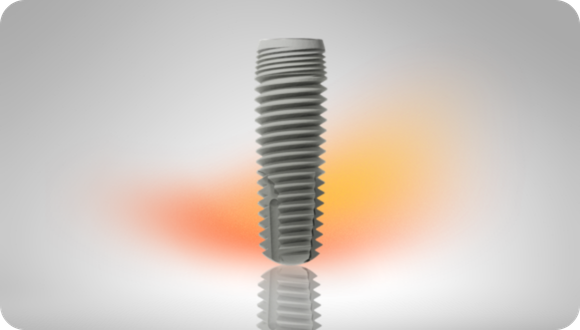
P1D — Developed for demanding bone
The SGS P1D features a densely threaded implant design, positioned particularly for hard-bone conditions, including mandibular D1 and D2 bone.
It combines its thread geometry with a conical implant-abutment connection, platform switching and the SGS SBTC surface.
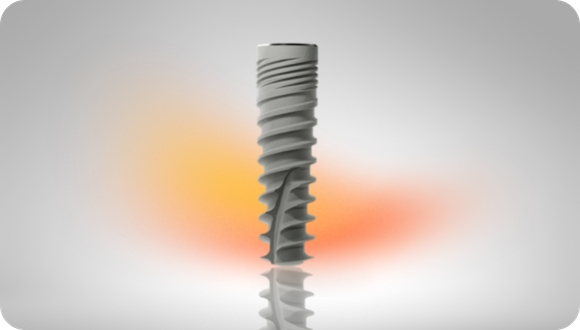
P7N — A dedicated narrow-diameter solution
When the available anatomical space is limited, conventional implant diameters may not be suitable.
The SGS P7N offers 3.0 mm and 3.2 mm diameter options with a dedicated Narrow Conical Platform and corresponding restorative components.
It provides an additional treatment-planning option for appropriately selected narrow sites.
These are not competing versions of the same implant.
Each has its own design priorities, indications and prosthetic requirements.
Surface technology deserves evidence, not just adjectives.
SGS SBTC® — Smart Bioactive Trabecular Coating
–
The interaction between an implant surface and the surrounding biological environment is a fundamental consideration in implant dentistry.
SGS uses its proprietary SBTC surface technology, a structured calcium phosphate coating with a complex microarchitecture and hydrophilic surface characteristics.
The surface is designed to interact with blood and the surrounding biological environment during the early phases of healing.
Its morphology, composition and hydrophilic behaviour are relevant to the processes involved in osseointegration. But the clinical performance of an implant depends on far more than its surface alone.
That is why we believe scientific findings should be examined alongside manufacturer descriptions.
What does the clinical research show?
–
In 2024, Head & Face Medicine published a randomised controlled clinical trial evaluating the SGS SBTC surface against another commercially available calcium phosphate coating.
The two-year study involved 40 SGS implants placed in 20 fully edentulous patients. Researchers assessed implant stability and changes in peri-implant bone levels.
Both groups demonstrated successful osseointegration, and no statistically significant differences in the main clinical outcomes were identified between the two coatings.
The findings support SBTC as a clinically comparable surface treatment within the conditions studied. They do not establish superiority over other implant surfaces or predict outcomes for every SGS implant design.
For clinicians reviewing a new implant system, that distinction matters.
The restoration is not an afterthought.
A well-designed implant fixture is only part of a successful restorative workflow.
From the moment an implant is selected, the restorative possibilities need to be considered. The choice of connection platform, availability of suitable abutments, impression components and digital restorative options all affect how treatment can be completed.
The SGS prosthetic portfolio includes solutions for conventional and more complex restorative requirements, including healing components, impression transfers, straight and angled abutments, temporary restorations, multi-unit solutions and overdenture attachments.
These components support treatment planning from initial healing through to definitive prosthetic rehabilitation.
P1D and P7N use different prosthetic platforms, so their restorative components are not automatically interchangeable. Selecting the correct connection and verifying compatibility remains essential.
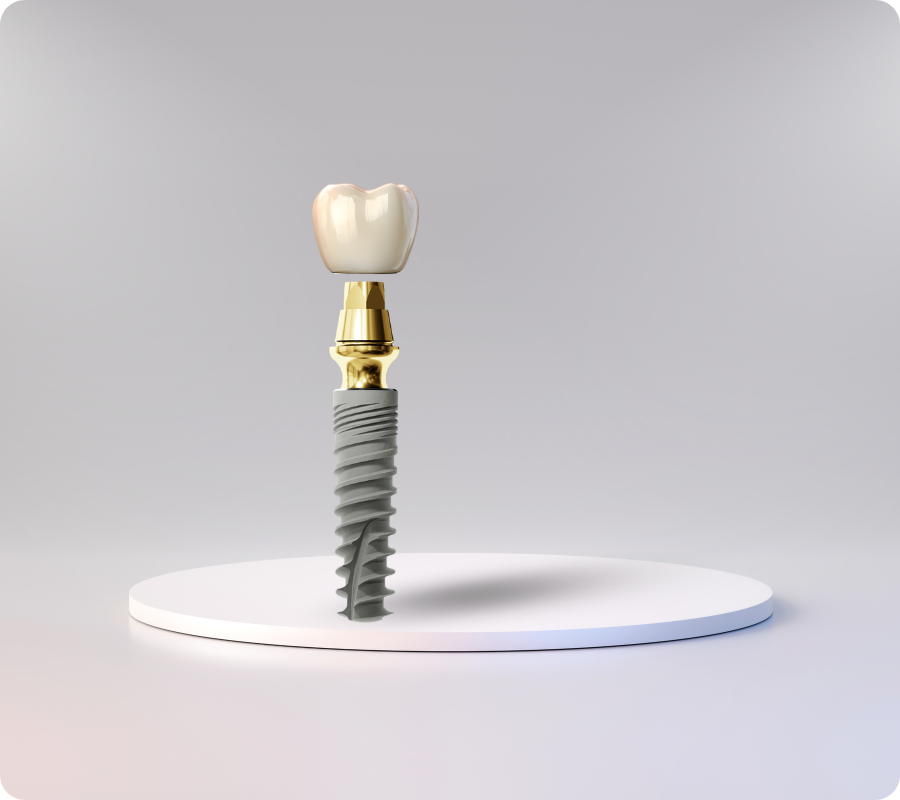
Digital dentistry should fit the way you work
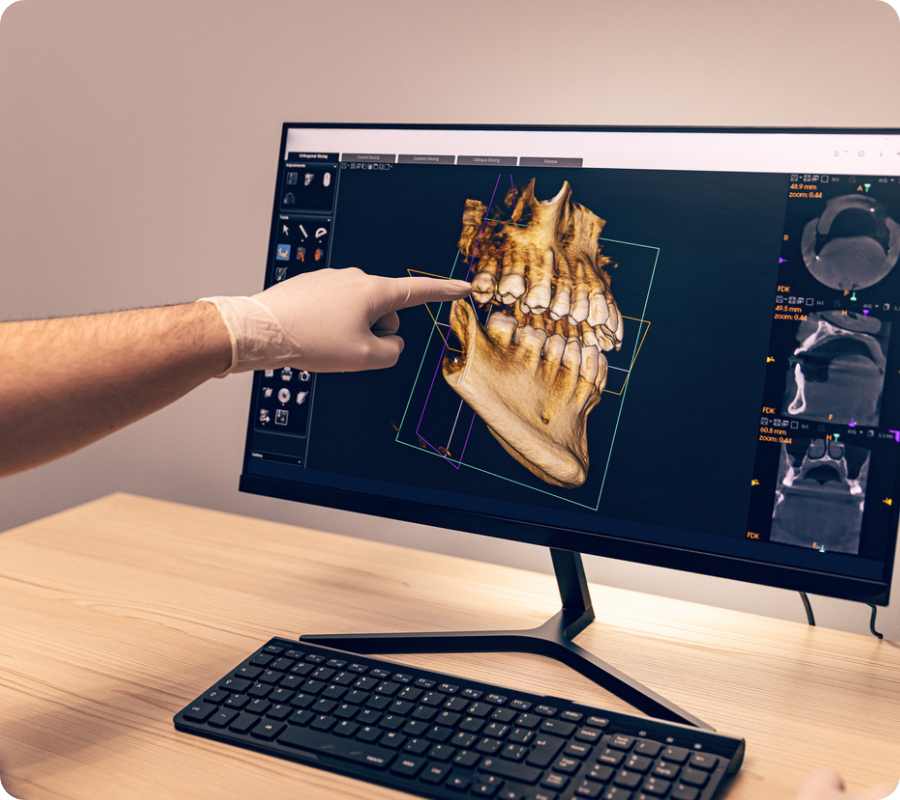
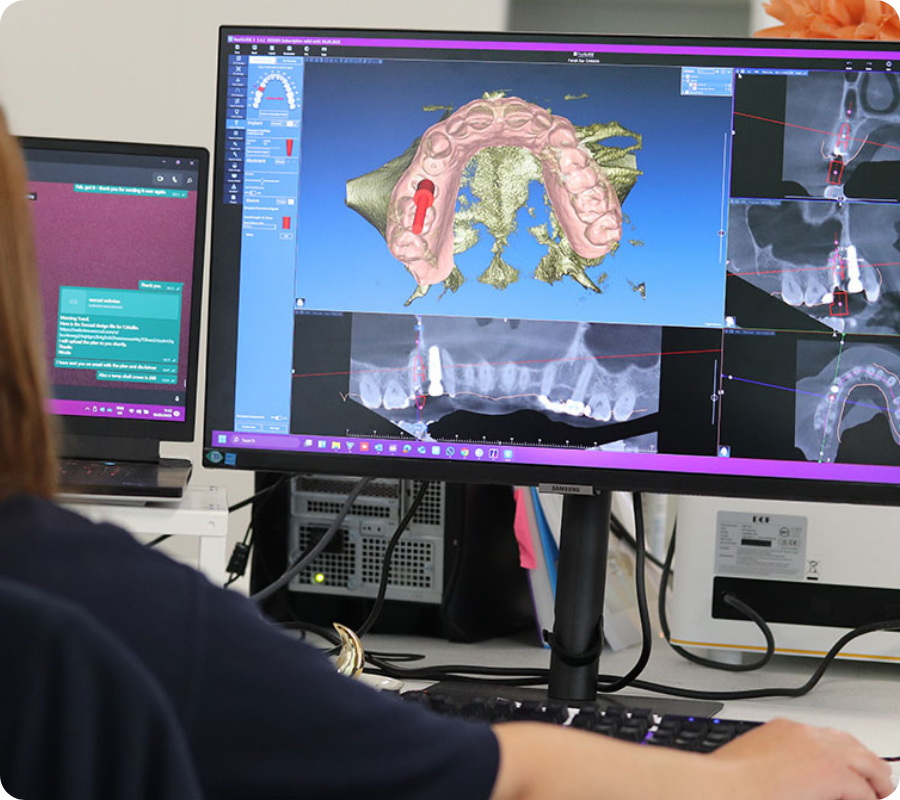
Digital implant dentistry depends on more than scanning technology. Accurate data transfer, compatible restorative components and reliable CAD/CAM integration are essential to an efficient workflow.
SGS supports both clinical and laboratory workflows with dedicated scan bodies, titanium bases and digital libraries designed for its implant platforms.
From digital impression to definitive restoration
SGS scan bodies enable the position, orientation and rotation of an implant or laboratory analogue to be transferred into CAD/CAM software. They can be used for both intraoral scanning and laboratory model scanning, providing the digital reference needed for designing implant-supported restorations.
The SGS titanium base range includes engaging, anti-rotational options for single-tooth restorations and non-engaging, free-rotational options for bridges and other appropriate multi-unit restorations.
Manufactured from Grade 5 titanium, the titanium bases are complemented by PEEK scan bodies designed for optical scanning. Platform-specific options, together with CAD/CAM libraries supporting selected direct-to-implant workflows, provide additional flexibility for clinicians and dental technicians.
The result is a digital restorative system that accommodates different clinical requirements without restricting the choice of restoration to a single approach.
Surgical instrumentation matters, too
An implant system should be evaluated together with the instrumentation and protocols required to place it.
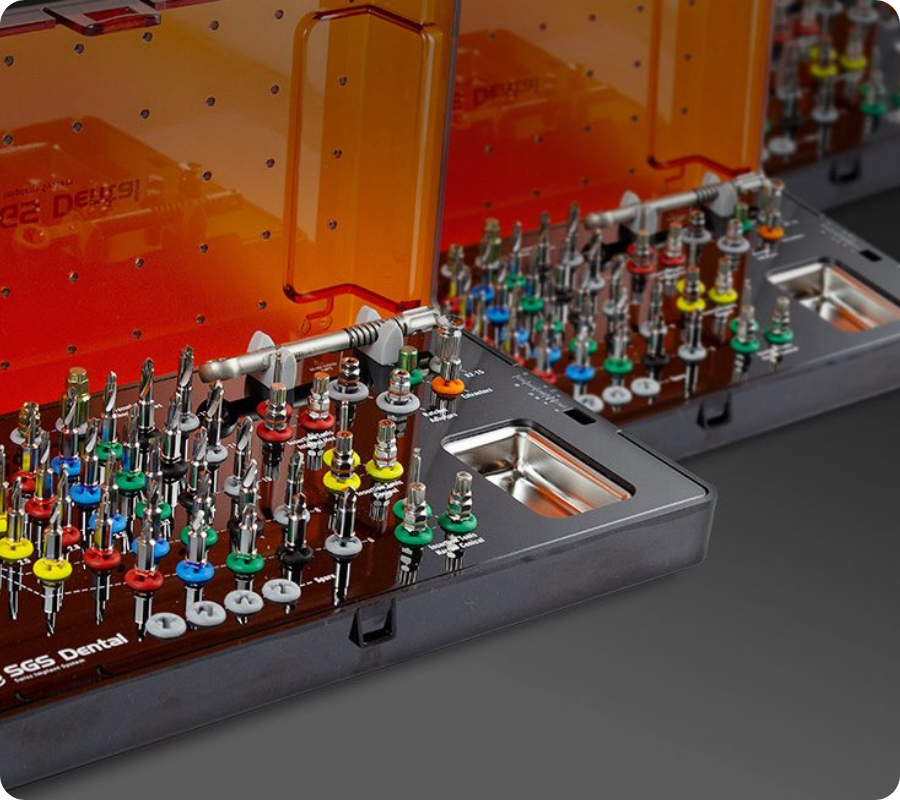
The wider SGS portfolio includes dedicated surgical kits, drilling instruments, prosthetic tools and guided surgery solutions.
Manufacturer documentation provides information on the instruments, implant-specific drilling sequences and technical requirements associated with the selected system.
For an experienced implant surgeon, clear surgical protocols and access to the correct instruments are essential parts of evaluating whether an implant design is suitable for practice.
A UK partner who understands implant dentistry
Product support should make clinical work easier, not more complicated.
–
When introducing an additional implant system, questions are inevitable.
You may need to identify a specific restorative component, verify compatibility, locate a surgical protocol or discuss which products are available in the UK.
SGS Dental UK provides a local point of contact for product information, ordering enquiries, technical documentation and restorative component selection,
supported by the wider SGS Dental organisation.
Our UK distribution is supported by dental professionals with practical implant dentistry experience.
That experience matters. We understand that a technical question is rarely just about a catalogue reference.
It usually arises from a real treatment workflow,
with a patient, a clinician and a dental laboratory all depending on the correct information.
Good value should never mean compromising your clinical judgement.
Price is a legitimate consideration when evaluating an implant system. So are restorative flexibility, instrumentation, technical resources and the ongoing availability of compatible components.
An attractive fixture price means relatively little if the supporting workflow becomes unnecessarily complicated.
SGS offers an established implant and restorative portfolio with a manufacturer positioning built around competitive pricing.
For practices reviewing their implant options, we encourage a comparison of the complete system rather than the implant price alone.
Consider the components required for the planned restoration, the associated surgical equipment, digital compatibility and the support available after purchase.
Only then does a meaningful comparison become possible.
Frequently asked questions
Is SGS Dental a Swiss company?
Yes. SGS Dental Implant System Holding AG is based in Zug, Switzerland, and operates internationally. Its European logistics and distribution infrastructure includes operations in Budapest, Hungary.
Which SGS implant systems are available in the UK?
Our initial UK range focuses on the P1D and P7N implant systems. These form part of the wider SGS portfolio, which includes additional implant designs and connection platforms. Please contact our UK team for current product availability.
Do P1D and P7N share the same prosthetic connection?
No. P1D uses the SGS Conical Platform, while P7N uses the dedicated SGS Narrow Conical Platform. Their restorative components must be selected accordingly.
Does SGS support digital restorative workflows?
Yes. SGS provides CAD/CAM libraries and digital restorative components for its implant platforms. Compatibility should be verified for the specific implant connection, component and software version.
Where can I review SGS technical and clinical documentation?
Product catalogues, available surgical protocols, digital libraries and relevant scientific publications can be accessed through SGS professional resources or requested from SGS Dental UK.
Could SGS have a place in your practice?
–
You do not need to replace the implant system you already trust to investigate another one.
Start by examining the designs. Look at the available restorative components. Review the technical documentation and published research. Consider how SGS would fit into your clinical and laboratory workflows.
Then speak to our UK team.
We would be pleased to help you explore whether SGS is a suitable addition to your practice.
Explore P1D & P7N → ⎢ Contact SGS Dental UK →
For dental professionals only. Implant selection and use must follow the applicable manufacturer’s instructions for use, product indications and individual clinical assessment.


