
AT A GLANCE
P1D vs P7N: Key Differences
–
Both systems share SGS surface technology and platform-switching principles, but their dimensions,
thread designs and restorative connections reflect different clinical applications.
| Feature | P1D | P7N |
|---|---|---|
| Primary design focus | Dense, hard-bone conditions | Restricted anatomical space |
| Clinical positioning | Particularly D1 and D2 bone | Selected narrow-space applications |
| Thread geometry | Densely threaded | Slightly aggressive |
| Diameters | Ø 3.5–5.0 mm | Ø 3.0–3.2 mm |
| Lengths | 6–16 mm* | 8–16 mm* |
| Connection | SGS Conical Platform | SGS Narrow Conical Platform |
| Platform switching | Yes | Yes |
| Surface technology | SGS SBTC | SGS SBTC |
| Restorative components | Standard conical platform | Dedicated narrow platform |
*Available lengths vary by diameter. The table summarises manufacturer product information and does not replace the current instructions for use or clinical assessment.
TWO SYSTEMS, DIFFERENT CLINICAL CHALLENGES
DENSE BONE
P1D
When bone density defines the challenge.
–
The SGS P1D features a densely threaded macrogeometry developed particularly for hard-bone conditions, including mandibular D1 and D2 bone.
Its design is intended for situations where bone density, osteotomy preparation and implant insertion require particular consideration. Appropriate primary stability should be achieved without unnecessary compression of the surrounding bone.
Diameters: Ø 3.5, 3.75, 4.2 and 5.0 mm
Connection: SGS Conical Platform
EXPLORE P1D →
RESTRICTED ANATOMY
P7N
When available space is limited.
–
The SGS P7N is a narrow-diameter implant developed for selected clinical situations where anatomical dimensions may restrict the use of conventional implant diameters.
Available in 3.0 and 3.2 mm diameters, it offers a dedicated narrow design. Implant selection must also account for bone volume, restorative requirements and anticipated functional loading.
Diameters: Ø 3.0 and 3.2 mm
Connection: SGS Narrow Conical Platform
EXPLORE P7N →
CONNECTION & RESTORATIVE COMPATIBILITY
RESTORATIVE INTERFACE
Two conical connections. Different restorative platforms.
–
Both P1D and P7N incorporate conical implant–abutment connections and platform switching. However, their restorative platforms are not interchangeable.
P1D — SGS Conical Platform
–
P1D uses the standard SGS Conical Platform, supported by its corresponding range of restorative components.
P7N — SGS Narrow Conical Platform
–
P7N uses a dedicated narrow conical connection, requiring restorative components designed specifically for this platform.
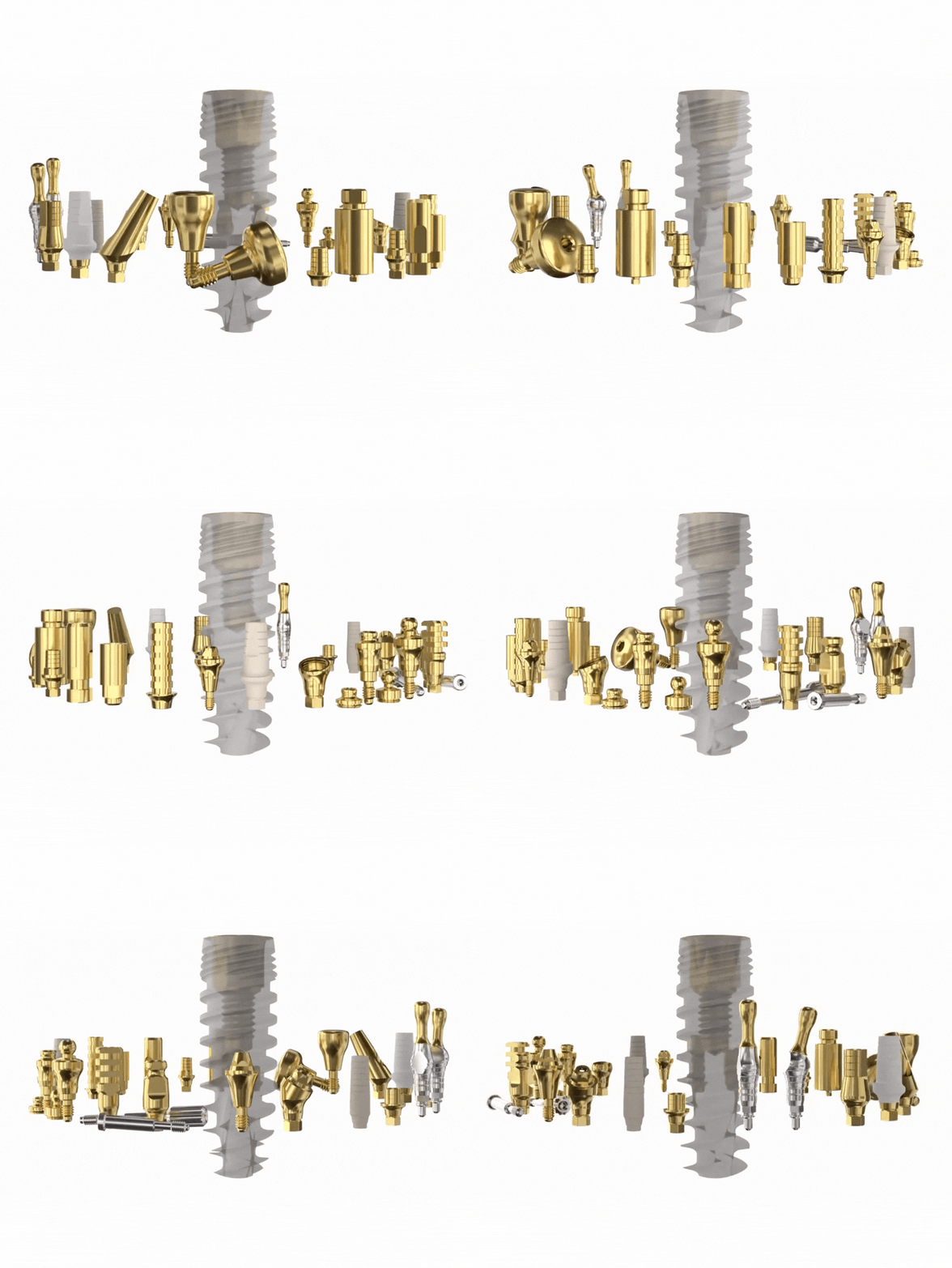
This distinction is particularly important when selecting healing components, impression transfers, abutments and digital restorative components.
The planned restoration should guide implant selection from the outset, with component compatibility verified against the current SGS technical documentation.
SHARED TECHNOLOGIES
Different designs. Shared SGS technologies.
Although P1D and P7N address different clinical requirements, both incorporate technologies from the wider SGS implant system.
SBTC Surface
Both implants use SGS SBTC surface technology, described by the manufacturer as structured and hydrophilic.
Platform Switching
Both incorporate platform switching within their respective conical connection designs.
Restorative Support
Both systems have dedicated restorative component ranges supporting conventional and digital workflows.
CLINICAL DECISION-MAKING
Choosing the right implant starts with the clinical situation.
The question is not whether P1D or P7N is the better implant. It is whether the implant’s design, dimensions and restorative possibilities are appropriate for the individual case.
Where dense bone is the principal consideration, P1D’s hard-bone positioning may make it relevant to the treatment plan. Where anatomical space is restricted, P7N may offer a narrow-diameter option, provided the available bone and anticipated restorative loading are suitable.
Neither implant should be selected on the basis of a single characteristic. Bone quality, anatomical dimensions, implant position, prosthetic design and the manufacturer’s surgical protocol must all be considered.
If neither system meets the clinical requirements, another appropriately indicated implant design should be considered.
The implant should support the planned restoration — not dictate it.
SGS DENTAL UK
Explore the right SGS system for your practice.
Compare the available configurations, review restorative compatibility and speak to our UK team about product information or technical documentation.


